

The Alien
There was something different afterward, she told her sister once, late at night over coffee. Something in her daughter’s eyes. Like she was looking at everything for the first time.

Seven
She's seven years old, sitting at the edge of the playground. The other children move like schools of fish, turning together, knowing things she doesn't know.
Their laughter has a frequency she can't match. When they cry, their tears mean something different than hers do.
At home, her mother holds her face between warm palms. "Look at me, sweetheart. Look at Mommy's eyes." But she's already looking past the irises to something else, counting the flecks of gold, mapping the blood vessels like tiny rivers.
Her mother's mouth moves. Words come out. Love you so much. But the sounds float past her like balloons she can't quite catch.
She learns to mimic.
This is what you do when someone cries: you pat their shoulder. Count to three. Say "there, there." This is what you do when someone tells a joke: you open your mouth wide, push air through your throat. Ha ha ha. She practices in the mirror until it looks almost right.
The family dog knows. It watches her from across rooms with ancient, knowing eyes. It doesn't come when she calls.
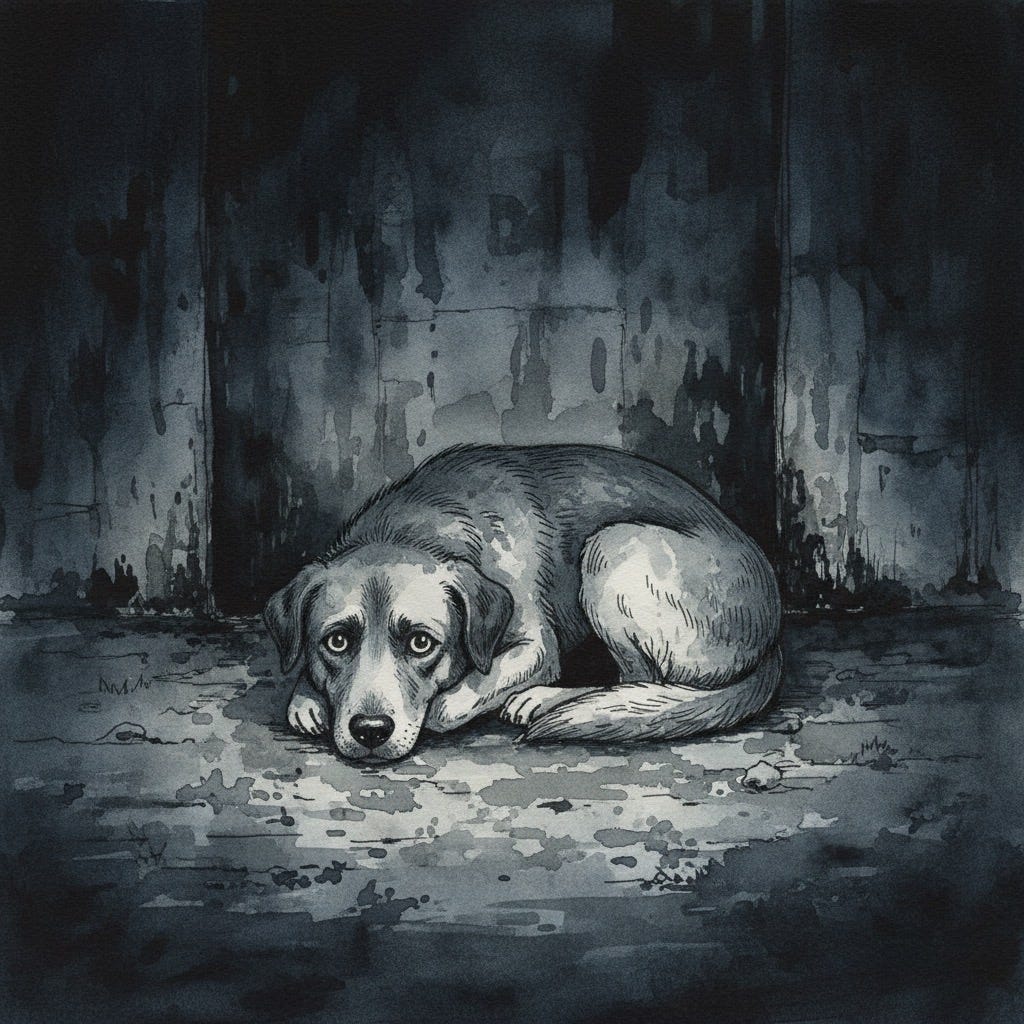
Smart animal.
In second grade, she discovers she can make Ashley Chen cry by telling her that her hamster will die someday. Everything dies. This is just information, facts as neutral as math. But Ashley's face crumples like paper, and the teacher pulls her aside. "We need to think before we speak. We need to consider other people's feelings.
"Other people's feelings.” She writes it down in her notebook. Studies it like vocabulary for a language she'll never speak fluently.
Her parents take her to doctors. She sits very still while they ask questions. Can you tell me how this makes you feel? She's learned the right answers by now.
Happy. Sad. Scared. Angry.
She feeds them back like a vending machine. Push the right button, get the right response.
But inside, it's different. Inside, she's watching herself from somewhere high and far away. Like she's operating her body by remote control. Smile now. Nod. Make eye contact, but not too much, that makes them uncomfortable.
At night, she lies in bed and imagines unzipping this skin. Stepping out of it like a winter coat. What would be underneath? Something better. Something worse. Something true.
She reads every book in the library about space. About distant planets where the gravity is different, where the light bends strange. Where you might breathe methane instead of oxygen. Where you might have copper blood instead of iron. Where you might finally, finally make sense.
Twenties
Twenty-four years old. A good job at a marketing firm. She's learned to dress like the others, professional but approachable. Navy blazer. Modest heels. She applies makeup reading magazine tutorials, painting on a face people want to see.
The office is a terrarium of human behavior. She takes notes. Brad from accounting touches people when he talks, hand on shoulder, quick pat on the back. Sarah from HR tilts her head when she listens. Empathy angle: fifteen degrees. She practices in the bathroom mirror during lunch.
Dating is algebra she can't solve. Men want things from her, but the things keep changing. Be mysterious but available. Be strong but vulnerable. Want them but not too much. She goes through the motions. Dinner. Movie. His apartment. The weight of his body, the sounds he makes. She performs pleasure like she's reading from a script."You're so different," one of them says, tracing her collarbone in the dark. "Not like other girls.
"No. Not like anyone.”
Her coworkers invite her to happy hour. She orders what they order. Laughs when they laugh. But she's calculating the whole time. How many sips between sentences. How long to hold eye contact. When to touch someone's arm to show connection.
Sometimes she gets it wrong. Says something that makes the conversation stop, everyone looking at her like she's spoken in static.
"That's... dark," someone says.
She files it away.
Don't mention how we're all just electrical signals. Don't point out the meaninglessness. Keep it light. Keep it surface.
She discovers she's good at her job because she sees patterns others miss. Consumer behavior is just math when you strip away the feeling.
Click rates. Conversion. ROI.
Numbers don't lie or pretend or need her to be anything other than effective.
At her performance review, her boss says, "You're brilliant, but you need to work on being more of a team player.
More... connected.
"Connected.” She writes it on a Post-it. Sticks it to her computer monitor. Stares at it like it might reveal its secrets.
She tries therapy.
The therapist has kind eyes and an office that smells like vanilla.
"Tell me about your childhood.”
"What's to tell? She was there. She did the things. She survived."
But how did it make you feel?
"That question again. She knows she's supposed to excavate trauma, to dig up buried pain. But what if there's nothing there? What if the hole goes all the way through?
She dates Marcus for eight months. He's patient and thinks her strangeness is quirky. "You're like a cat," he says. "Independent."
But even cats purr. Even cats seek warmth.
When he says he loves her, she counts to three. Says it back. Watches his face light up like she's given him a gift. Later, alone, she whispers it to herself in the dark. Love you. Love you. Love you. Trying to find the frequency that makes it real.
He leaves eventually. They always do. "I feel like I can't reach you," he says. "Like you're not really here."
No. She's not.
Sixties
Sixty-three. The skin fits better now, worn soft with age. Or maybe she's just tired of holding herself so carefully, of maintaining the disguise.
She lives alone in a house by the water. Has for years now. The neighbors think she's eccentric but harmless. The witch at the end of the lane. She feeds the birds. Tends a garden. Watches the tides change.
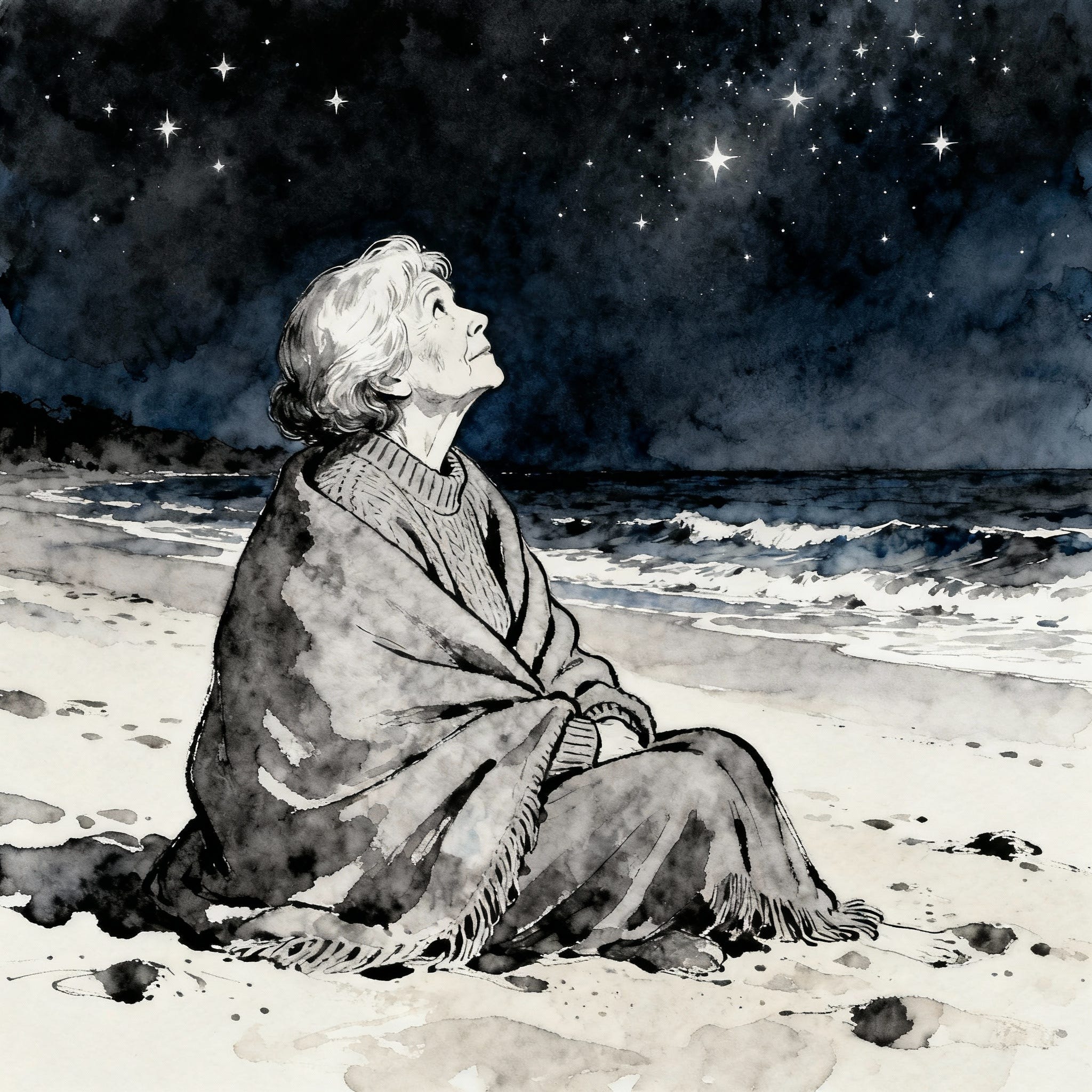
Sometimes she forgets to perform. Goes whole days without making the right faces. The grocery clerk looks concerned when she doesn't smile back. The mailman stops trying to make small talk.
Good.
She's had a life. That's what people say. A career. Relationships. Even a marriage once, brief and confused. Two years of playing house until David realized what the others had: that living with her was like living alone.
"It's like you're waiting for something," he'd said near the end. "Like you're just killing time.”
“Yes..”
That's exactly what this has been. Killing time.
Her body betrays her humanness. Joints that ache. Hair gone gray. The doctor speaks of cholesterol and bone density and the various ways bodies fail. She nods. Takes the pills. But part of her is curious. What happens when this costume finally falls apart?
She dreams more now. Dreams of home, though she couldn't describe it if you asked. Just a feeling. A frequency. Somewhere she doesn't have to translate herself, where her silence means what it means, where her strange love is love enough.
The young woman at the library asks if she has children. Grandchildren. She shakes her head. Sees the pity flash across the girl's face. Poor thing. All alone.
But she's always been alone. Even in crowds. Even in bed with lovers. Even in her mother's arms all those years ago, searching for something in those gold-flecked eyes that was never there.
Or maybe it was there, and she just couldn't see it. Wrong frequency. Wrong wavelength. Wrong species.
She reads still. Science journals about extremophiles, organisms that thrive where nothing should. In boiling water. In acid. In the void. Life finds a way, even when it shouldn't. Even when it doesn't fit.
At night, she sits on her porch and watches the stars. Somewhere among them is an answer. A reason. A home. She knows this like she knows her own heartbeat, steady and certain and not quite human.
The neighborhood children whisper stories about her. She's a ghost. She's a witch. She eats bugs. She came from the sea. Let them talk. Children understand things adults forget. That some people aren't people at all.
Here's what she knows now, at the edge of everything:
They're coming.
She can't say how she knows. The knowledge sits in her bones like marrow. The same way birds know to fly south. The same way salmon know the stream.
All these years of not fitting, of wearing this skin like an ill-made suit, of speaking this language like it's her second or third or fifteenth. All of it has been temporary. A mission, maybe. Or a mistake. Or just time served in a place that was never home.
She's started leaving lights on. Patterns that might mean something to someone watching. Or maybe mean nothing. Maybe she's just an old woman losing her mind, believing in rescue that will never come.
But what else is there to believe?
That this is it? That she lived sixty-three years among a species she could mimic but never join? That she'll die here, in this skin, having never once felt what they feel when they say the word belonging?
No.
She knows about waiting now. Has perfected it. Sits on her porch as the sun sets, as stars emerge like a map home. Her neighbors see an old woman. Harmless. Maybe lonely. They don't see her listening to frequencies they can't hear. Don't see her counting down.
Sometimes she remembers being seven. Sitting at the edge of the playground. Watching the others move in patterns she couldn't follow. Her mother's face swimming above her. Look at me, sweetheart.
But she was looking. She was always looking. Just not at what they wanted her to see. Looking past, looking through, looking up. Looking for the ship. Looking for her people. Looking for the place where her strange heart makes sense.
They're coming.
She pulls her cardigan closer. The air smells of salt and endings. Somewhere, a foghorn calls. Somewhere else, farther than sound can travel, someone is calling back.All she has to do is wait.
She's good at that now. Has had a lifetime of practice. Wearing this body. Speaking these words. Pretending to be human when humanity fits her like a glove with too many fingers.
But not for much longer.
Soon, she'll unzip this skin one last time. Step out of this life like a coat she never asked to wear.
And go home.
Finally, finally home. Where the gravity is different. Where the light bends strange. Where love means what she means when she feels it. Where silence is a language and distance is a kind of togetherness and being alien is the only way to be.
The stars pulse with promise.
She closes her eyes and waits.
Before
The first time was June 1965. She was three years old.
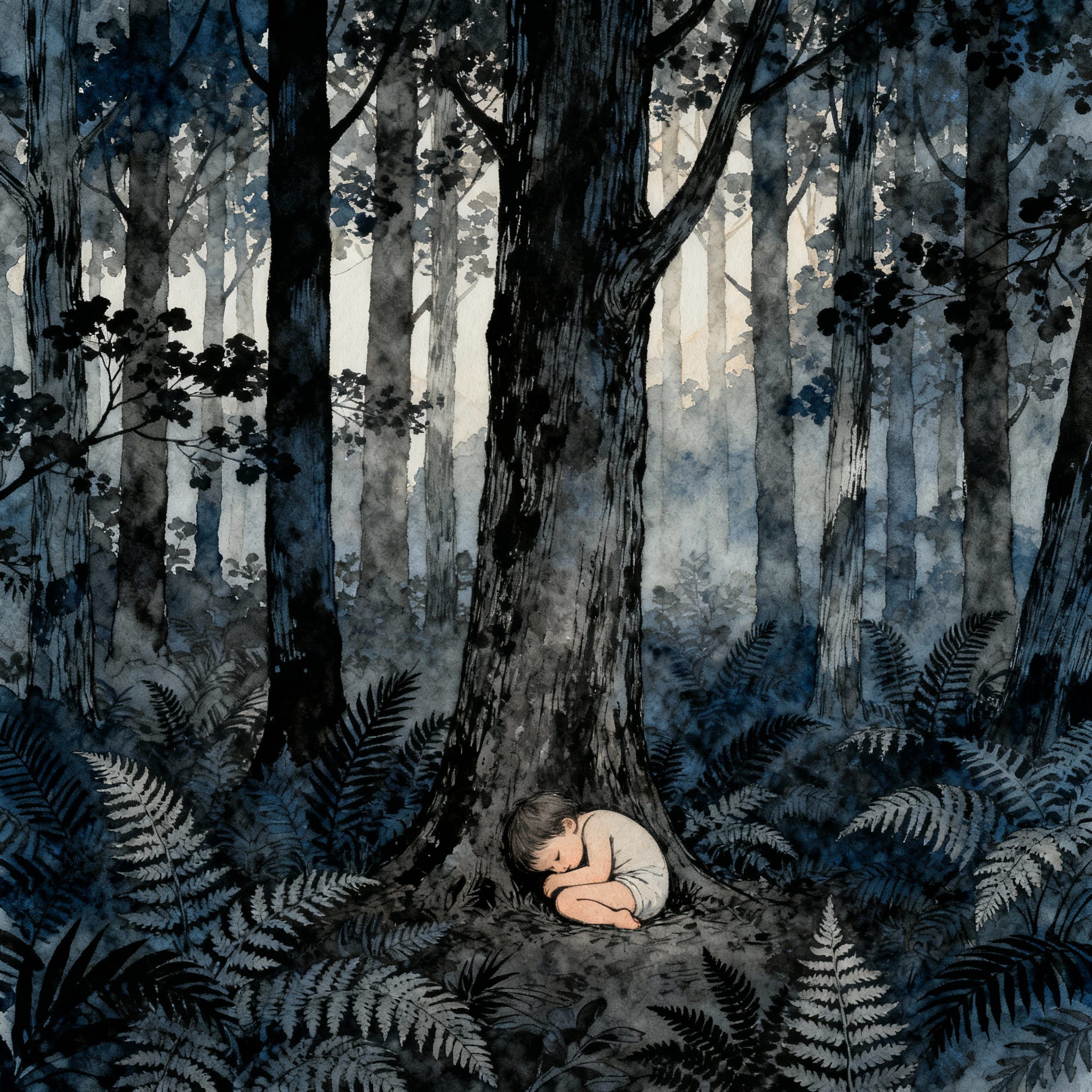
The reports said she wandered into the forest behind her mother’s house.
A Tuesday afternoon in early summer, the air thick with honeysuckle and heat. Her mother had been hanging laundry, the white sheets billowing like sails. She turned away for what she later described as thirty seconds. Maybe forty-five.
When she turned back, Emma was gone.
The search lasted two days. Volunteers combed the woods with flashlights and dogs. Her mother’s voice went hoarse calling her name. The forest was dense, tangled, full of places a small body could disappear forever.
They found her Wednesday morning, sitting cross-legged under an oak tree, picking at bark like she was waiting for someone to remember to fetch her. No scratches. No tears. Her clothes were clean. When the sheriff picked her up, he said later that she weighed nothing—light as air, like she might float away.
“Where were you?” her mother asked, voice breaking as she held her daughter’s face between shaking hands. “Where did you go?”
“With the lights,” Emma said. Then didn’t speak again for three days.
The doctors found nothing wrong. No signs of exposure, no dehydration, no trauma. Miraculous, they called it. A miracle.
Her mother never quite believed it. There was something different afterward, she told her sister once, late at night over coffee. Something in her daughter’s eyes. Like she was looking at everything for the first time. Or like she’d been somewhere else and was trying to remember how to be here.
But children are strange, her sister said. Children forget. Children come back different.
She was only three. Too young to remember.
That’s what her mother told herself.