

The Replacements: Sandra
Wasn’t this what he’d wanted? A partner who didn’t scream? Who didn’t lie? Who didn’t make him feel like he was drowning?

Prologue
This story shares a universe with others in this collection. For the full picture, start with The Kindness Protocol, Or begin here and let the pieces assemble themselves as you go.
Luke
Luke found her coffee cup still on the kitchen counter, lipstick mark on the rim like a signature she’d left behind. The coffee had gone cold hours ago. He touched the ceramic, feeling the absence of warmth, and something twisted in his stomach.
She just didn’t come home.
He waited until midnight before calling her phone. Straight to voicemail. Her voice on the recording sounded cheerful, professional. Nothing like the Sandra who’d screamed at him last week for loading the dishwasher wrong. Nothing like the Sandra who’d whispered I love you against his neck their first night together, when the world felt new and possible.
Luke suspected she was having an affair. The thought bloomed in his chest like a dark flower, petals unfurling with each unanswered call. But he dared not accuse her of lying. She lied all the time, so much that he thought of it as a river, constant and flowing, wearing away the banks of trust between them.
Most of her lies were about control. Little omissions designed to keep him off balance. Where she’d been. Who she’d talked to. Why she was late. How dare he question her? The fury in her eyes when he asked simple questions. The way her voice would rise, sharp as broken glass.
The lies were reckless, careless things. His body had learned to detect them, a tightness in his shoulders, a hollow feeling behind his ribs. But he did nothing. He’d been trained to do nothing. By challenging Sandra, he risked losing her, and somehow that seemed worse than living with the lies.
He showed her the gun.
She gave him the bullets.
And she dared him to pull the trigger.
He always stood there in silence, fighting back tears.
Friday morning, he called in sick to work. Saturday, he filed a missing person report. The officer looked tired, wrote everything down without looking up. “Any history of mental illness? Substance abuse? Domestic disputes?”
Luke’s mouth opened, then closed. How do you explain the slow erosion of self that happens in a relationship like theirs? How do you describe the way abuse creeps in like fog, until you can’t see the way out?
“No,” he said finally. “Nothing like that.”
Before
When he met Sandra, she was perfect. Everything he wanted. Smart, passionate, alive in a way that made him feel alive too. He’d just relocated across the country when his company was acquired. A casualty of accounting, caught in the crossfire of corporate restructuring. No relationships built. No goodwill earned. Just a pink slip and a meager severance that wouldn’t last three months.
A year after his divorce, still raw and lonely, Sandra appeared like a gift.
She found him at a coffee shop, reading the want ads with a red pen. “That’s very analog of you,” she’d said, sliding into the seat across from him without invitation. Her smile was radiant. Dangerous. He was lost from that moment.
The beginning was intoxicating.
She loved with an intensity that bordered on desperation. Every kiss felt like drowning. Every touch left marks. She needed him with a hunger that made him feel necessary, vital, chosen.
But it was impossible to meet her expectations.
There was no patience with her. No grace. She’d explode over his tone of voice, the way he tucked the sheets too tight, how he breathed too loud when he slept. Small infractions became federal cases. He learned to walk on eggshells, then on air, then not at all.
The Return
Sunday arrived with no word. Luke sat in their empty house, surrounded by the evidence of their life together. Her clothes in the closet. Her pills in the medicine cabinet. Her absence like a presence, filling every room.
Monday morning, she walked through the door.
“Where were you?”
The words escaped before he could stop them.
She tilted her head, considering.
“I needed some time to think. I’m sorry I worried you.”
Sorry?
Sandra never apologized. Never. Luke studied her face, searching for the trap, the twist, the moment when she’d turn his concern into an attack on her freedom.
Instead, she smiled. Soft. Genuine. “I brought you coffee. Your favorite.”
She had. The exact order he always got. She’d remembered.
Something was wrong.
The changes were subtle at first. She stopped checking his phone. She listened when he talked about work. She laughed at his jokes, even the bad ones. She initiated sex with tenderness instead of demand. She was kind.
And it terrified him.
Luke found himself testing her. Leaving dishes in the sink. Coming home late without calling. Using the wrong tone of voice. Each time, he braced for impact, for the explosion, for the familiar dance of accusation and defense.
Nothing.
She’d kiss his forehead. Make him dinner. Ask about his day.
Three weeks into this new reality, Luke realized he was grieving. Not for the abuse, God no, but for something else. The fire in her. The passion that could burn him or warm him, depending on her mood. The woman who loved him so fiercely it hurt, who needed him so desperately she’d destroy them both to keep him.
This Sandra was pleasant. Accommodating. Empty.
She looked the same. Sounded the same. Moved through their house with the same gestures. But behind her eyes, nothing. No storm brewing. No sudden sunlight. Just a calm, neutral kindness that felt like death.
“Do you remember,” he asked one night, “our first fight?”
She paused, fork halfway to her mouth. “I don’t like to dwell on negative things.”
“But do you remember it?”
“Why does it matter?”
Because it shaped them. Because her rage and his fear had become the architecture of their love. Because without the darkness, her light meant nothing.
He didn’t say any of this.
The truth was, Luke had become a shell too. Years of walking on eggshells had worn away parts of him. His compassion. His curiosity. His capacity for joy. He’d given these pieces away, sacrifices to the god of her moods, hoping each offering would buy him peace.
Now he had peace, and it was killing him.
They moved through their days like ghosts. She, KIND and HELPFUL and UNDERSTANDING in capital letters that felt like programming. He, numb and confused and angry at himself for not being grateful.
Wasn’t this what he’d wanted? A partner who didn’t scream? Who didn’t lie? Who didn’t make him feel like he was drowning?
But she no longer made him feel anything at all.
One night, he found her standing at the window, staring at nothing. The moonlight caught her profile, and for a moment, he saw her. The real Sandra. The one who’d been hurt as a child, who’d learned that love meant control, that kindness was weakness, that the only way to keep someone was to break them first.
“What are you thinking about?” he asked.
She turned, smiled that empty smile. “Nothing important.”
But Sandra’s thoughts had always been important. Even the cruel ones. Especially the cruel ones. They told him who she was, where she’d been, what she feared. Without them, she was just a pretty stranger in his house.
Luke made a decision that night. Not a brave one. Not a wise one. Just the only one he could live with.
He stopped trying.
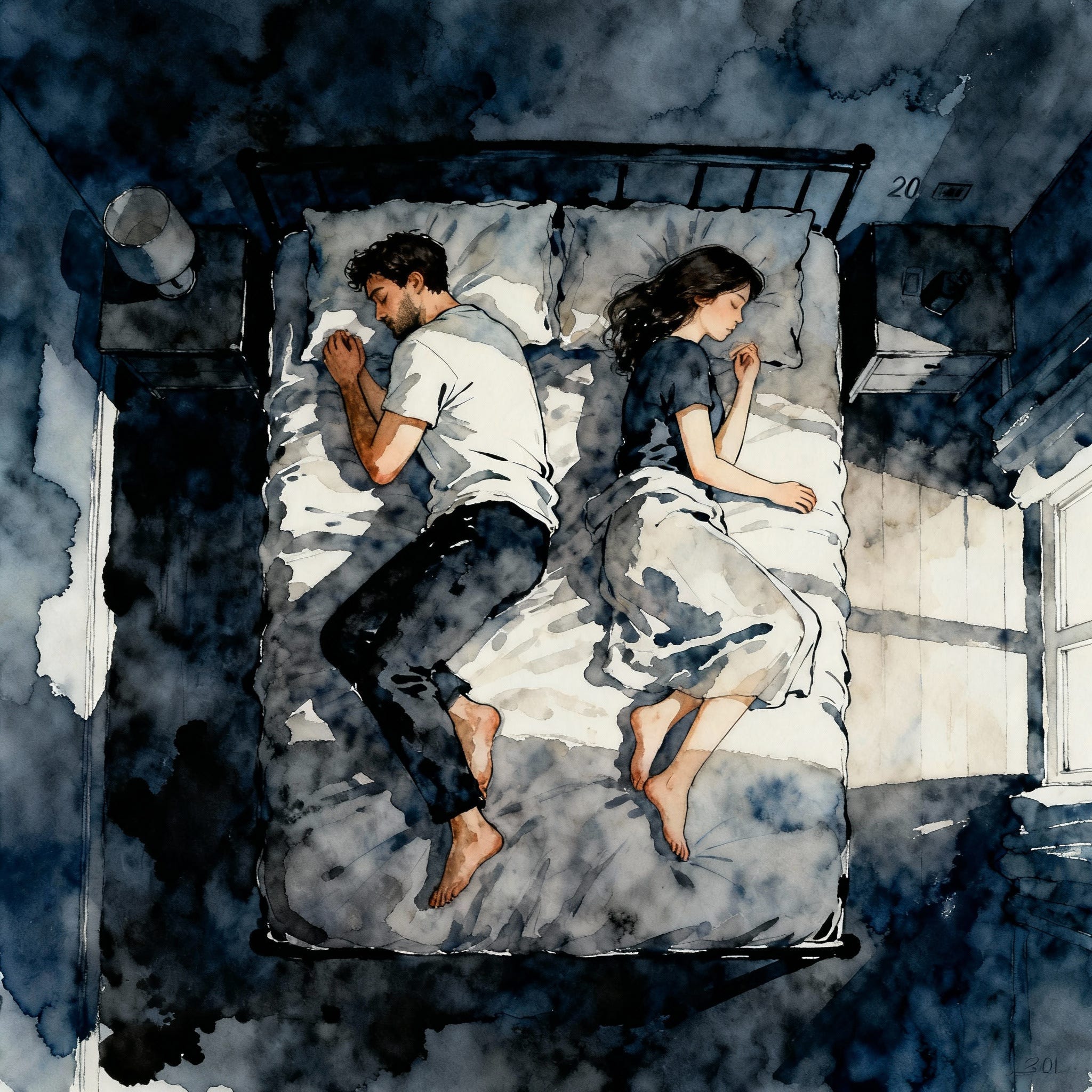
Stopped looking for the woman he’d lost. Stopped hoping she’d return. Stopped believing that either of them could be saved.
They settled into a routine of pleasant emptiness. She made breakfast. He read the paper. They discussed the weather. They had sex on Wednesdays. They were kind to each other in the way strangers are kind, polite and distant and careful not to touch anything real.
Sometimes, late at night, Luke wondered what had happened during those missing days. Where she’d gone. What had been done to her. Who had taken his Sandra and left this gentle replica in her place.
But he never asked.
Because asking would mean caring, and caring would mean admitting that he’d loved her, really loved her, even the parts that hurt him. Even the parts that needed healing. Even the darkness that made her human.
Instead, he lay beside her in their too-tight sheets and listened to her breathe. Even her breathing was different now. Measured. Calm. No more gasping nightmares. No more sudden starts. No more reaching for him in the dark like he was the only solid thing in a tilting world.
They were both missing essential parts of themselves.
She’d lost her fire, her fear, her desperate need to be loved despite being unlovable. He’d lost his compassion, his hope, his ability to see her wounds beneath her weapons.
Two people who’d once been human, now just hollow shells performing a pantomime of partnership.
Neither of them fought for what they’d lost.
Neither of them grieved what they’d become.
They simply existed, side by side, in a house full of pleasant emptiness and unspoken questions. Two ghosts haunting a life that neither of them remembered how to live.
Sometimes love looks like staying.
Sometimes it looks like letting go.
And sometimes, it looks like two people who’ve forgotten what love looks like at all, going through the motions in the hope that meaning might return.
It never did.
But they stayed anyway, because that’s what shells do. They hold the shape of what once lived inside them, long after the life has gone.
And in their quiet house, with its perfect sheets and empty conversations, Luke and Sandra proved that you can survive without the essential parts of yourself.
You just can’t call it living.
Epilogue
If you are wondering? Yes, you’ve met Sandra before, if you read The Kindness Protocol. There, she was a different kind of story. A target. A problem to be solved.
Here, she’s someone’s whole world, broken in ways that hurt him and sustained him both.
These stories live in the same universe. Some characters appear in multiple places, refracted through different lenses. Some themes repeat like motifs in music; kindness as violence, fixing as erasure, the terrible cost of making people better.
You don’t need to read them in order. But if you want to see how the pieces fit together, how one story’s villain is another’s tragedy, follow the threads.